The 15-Container Moment
Every project has a turning point-a moment where you realize the path you’re on isn’t quite right. For Wayli, that moment came when I was ready to release it.
I had built a location tracking application. Nothing too complex-just tracking GPS coordinates, detecting trips, recognizing transport modes. The kind of app that should be straightforward to deploy. I had chosen Supabase as the backend because it offered everything I needed: authentication, database, realtime, storage. All the pieces were there.
Then I looked at what it would take for someone to self-host it.
The Self-Hosting Reality Check
Supabase is impressive. It’s a complete Backend-as-a-Service with a great developer experience. But for most projects-especially a simple location tracker-it’s overkill. The self-hosted stack includes services for analytics, edge functions, image processing, log aggregation, and more. Features that sound great on paper but add operational burden when you just need a database and an API.
To self-host Wayli with Supabase, you’d need to run analytics, auth, db, functions, imgproxy, kong, meta, pgbouncer, realtime, rest, storage, studio, vector, and MinIO-before even counting Wayli itself.
That’s 15 containers-just to track location data.
The Question That Changed Everything
I stared at that architecture diagram and asked myself a simple question:
If I find this daunting, will anyone else even try Wayli?
Sure, Supabase has a self-hosting community. They’re proud of it. But how many people actually run it themselves? How many have the infrastructure knowledge, the time, and the patience to maintain 15 interconnected services?
I suspected the answer was: not many.
And that was a problem. Because Wayli is built on a simple premise: your location data should stay on your infrastructure. If self-hosting is too complex, that premise falls apart.
Building the Alternative
That frustration became the seed for Fluxbase.
What if I could build something that offered the same core features-REST API, authentication, realtime, storage-but in a single, self-contained binary? No microservices sprawl, no container orchestration nightmares, just one thing to deploy.
Fluxbase takes a different approach:
- Single binary - Everything runs in one Go process
- One dependency - PostgreSQL is the only external service
- Built-in everything - Auth, API, realtime, storage, functions-all included
- Admin dashboard - Configure and manage without restarts
The comparison is stark:
| Aspect | Supabase | Fluxbase |
|---|---|---|
| Containers | 15 | 3 |
| Dependencies | PostgreSQL + 12 services | PostgreSQL only |
| Deployment | Docker Compose / Kubernetes | Single binary or container |
| Complexity | High | Low |
Wayli Reborn
With Fluxbase ready, I did something drastic: I replaced Wayli’s entire backend.
Every API endpoint, every authentication flow, every realtime subscription-all migrated from Supabase to Fluxbase. The process took time, but the result was worth it.
Now, deploying Wayli means deploying three containers:
- Wayli (the app)
- Fluxbase (single container)
- PostgreSQL
That’s it. Three containers instead of fifteen.

What Wayli Does
Wayli is a privacy-first, self-hosted location tracking application. It’s designed for people who want the insights of location tracking without handing their data to third parties.
Key Features
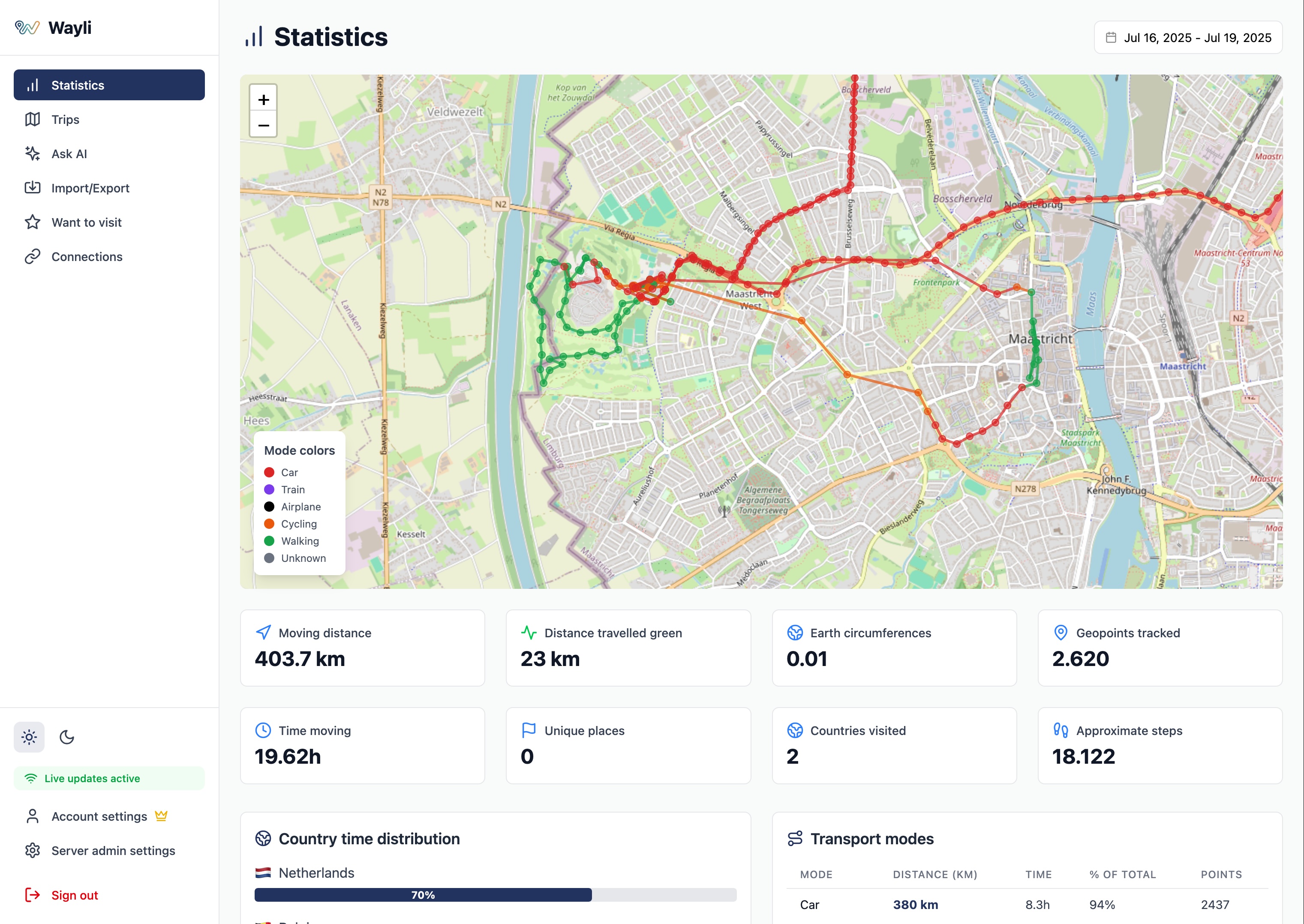
Automatic Trip Detection - Wayli intelligently detects when you’re traveling and groups your location points into meaningful trips. No manual logging required.
Transport Mode Recognition - Whether you’re walking, driving, cycling, or taking transit, Wayli identifies how you’re moving.
Beautiful Visualizations - Interactive maps show your journeys, with detailed statistics about distance, duration, and patterns.
Privacy-First Architecture - Your location data never leaves your server. No cloud services, no third-party tracking, no data selling.
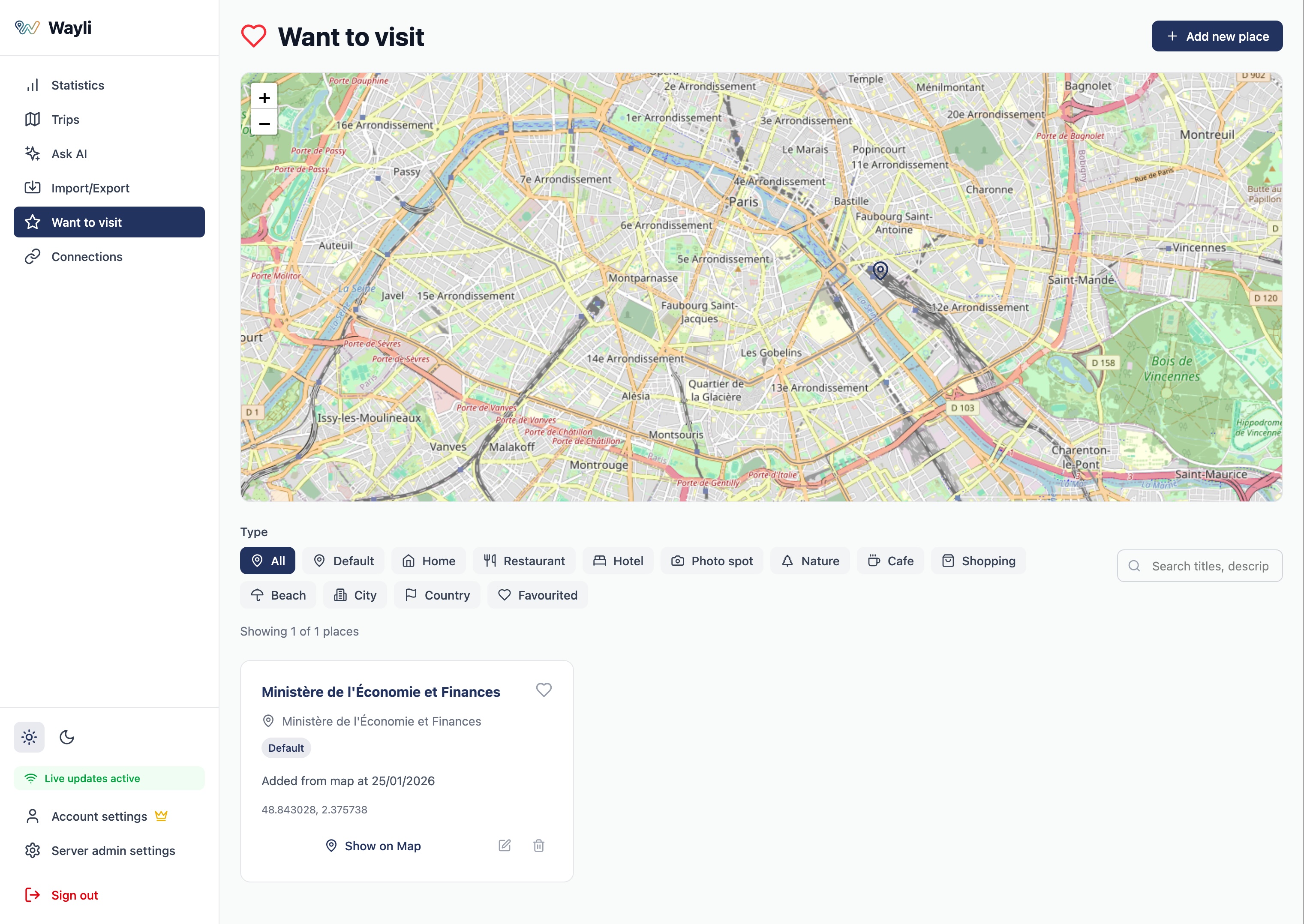
AI-Powered Insights
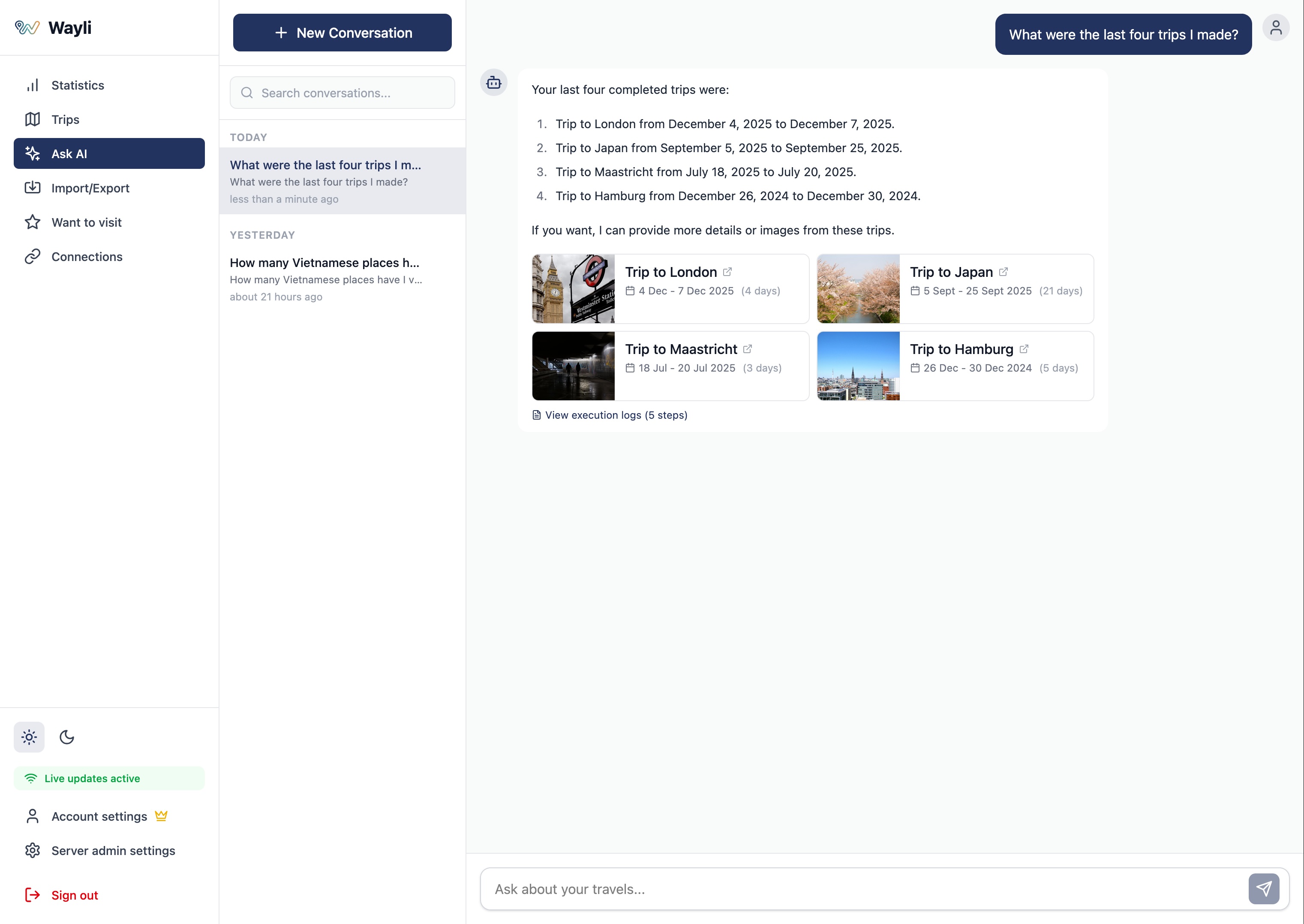
Wayli includes an AI assistant that can answer questions about your travel history using natural language. Ask “Where did I go last weekend?” or “What’s my most-visited coffee shop?”-that’s the aim.
Making sense of noisy location data is challenging, and there’s still work to be done. But the foundation is there, and it will only get better as the technology matures.
The Virtuous Cycle
Here’s what makes this interesting: Wayli and Fluxbase improve each other.
Every Wayli user is also testing Fluxbase. Every edge case, every performance bottleneck, every feature request-they all feed back into making Fluxbase better. And when Fluxbase improves, Wayli automatically benefits.
This isn’t accidental. It’s the NimbleFlux philosophy in action: build products that reinforce each other, fail fast, iterate quickly.
Take Control of Your Location Data
Location data is incredibly sensitive. It reveals where you live, where you work, where you sleep, who you visit. Handing that data to a third-party service-even one with good intentions-requires trust that may not be warranted.
Wayli offers an alternative: self-hosted location tracking with all the features you’d expect, but none of the privacy compromises.
- Your server - Deploy on a VPS, a homelab, or even a Raspberry Pi
- Your data - Location history stays on your infrastructure
- Your rules - No terms of service, no data retention policies, no surprises
If you’ve been looking for a way to track your travels without sacrificing privacy, give Wayli a try.
Visit Wayli →